Same pavilions, same tunnels, two price tags
What the €18 self-guided entry includes
Access to the entire site: the pavilions, tunnels, gardens, and the story of Art Nouveau in Barcelona.
What you see
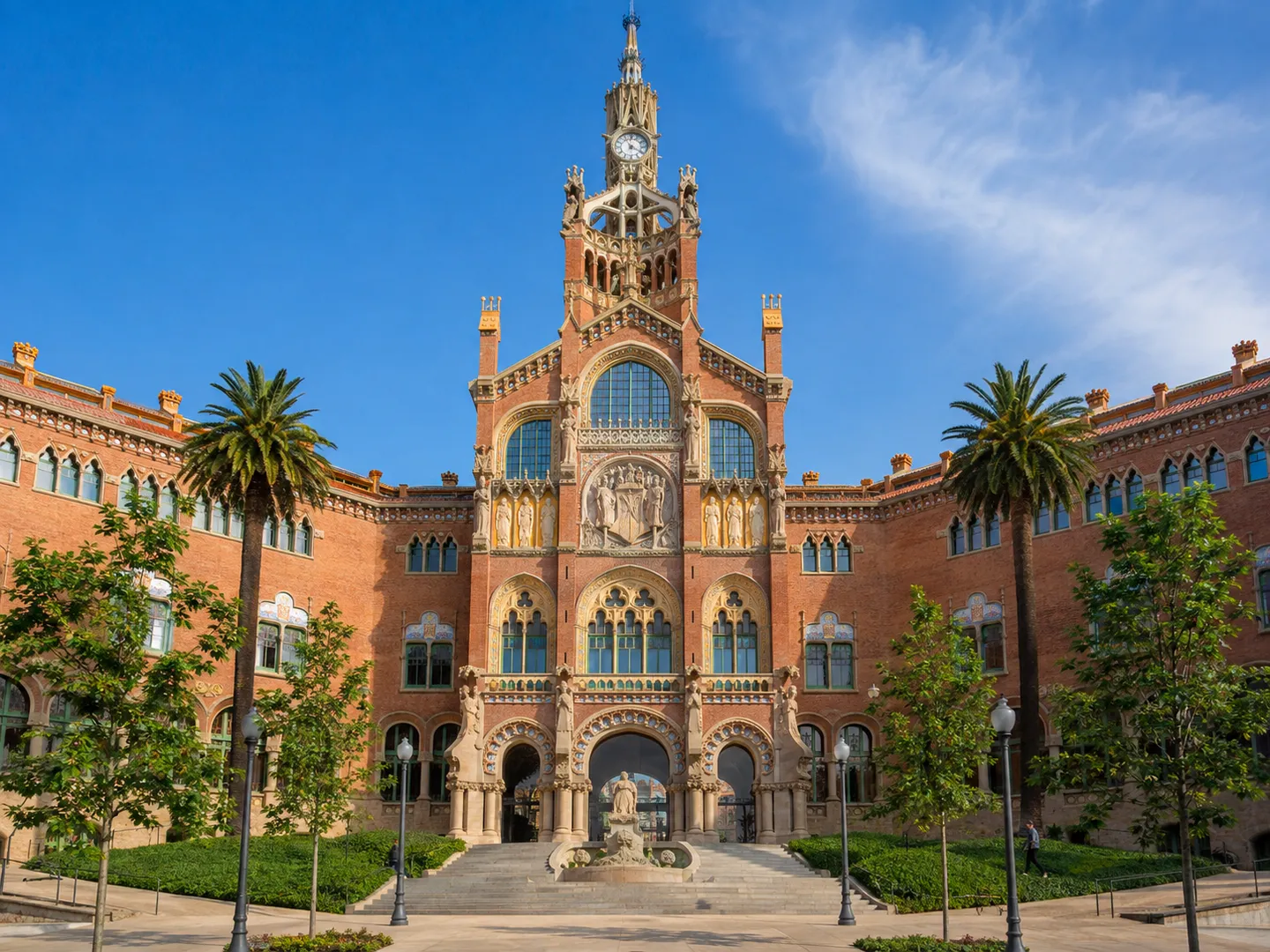
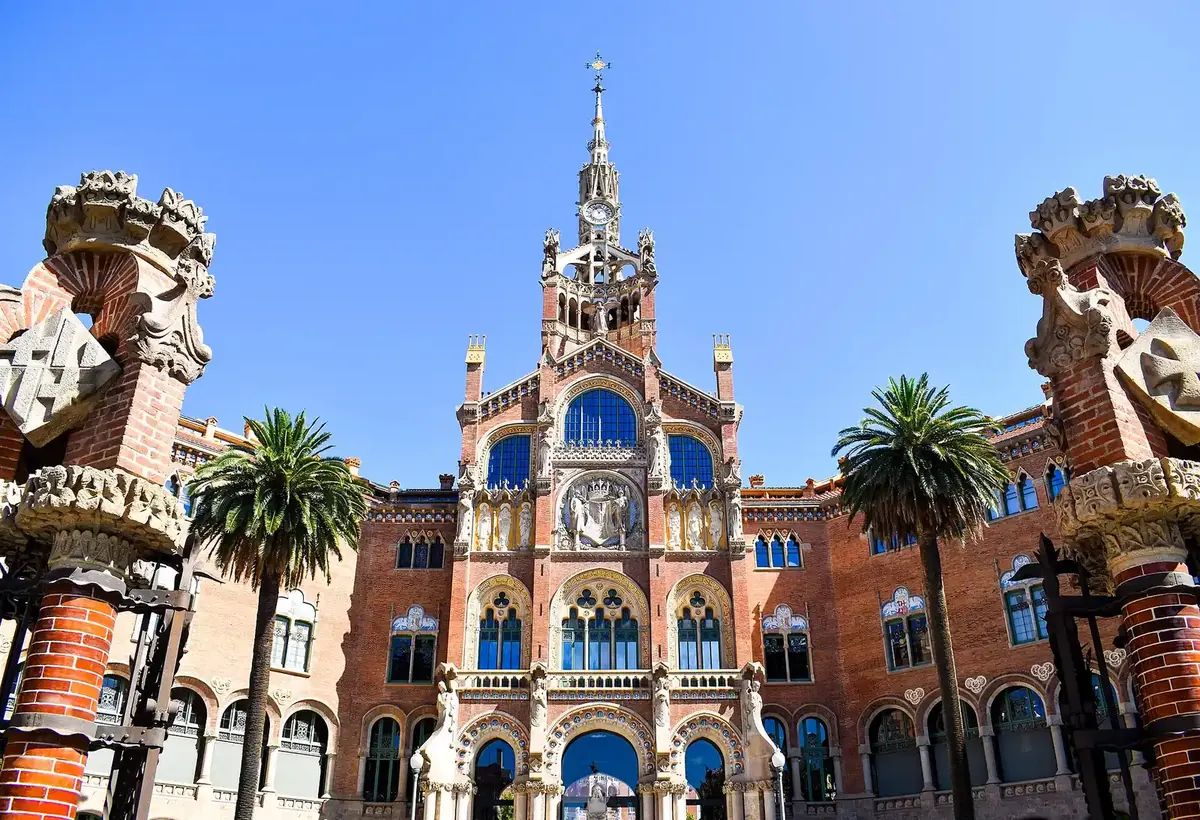
- Administration building mosaic façade & Art Deco stair hall
- Sant Rafael pavilion restored as a 1920s ward
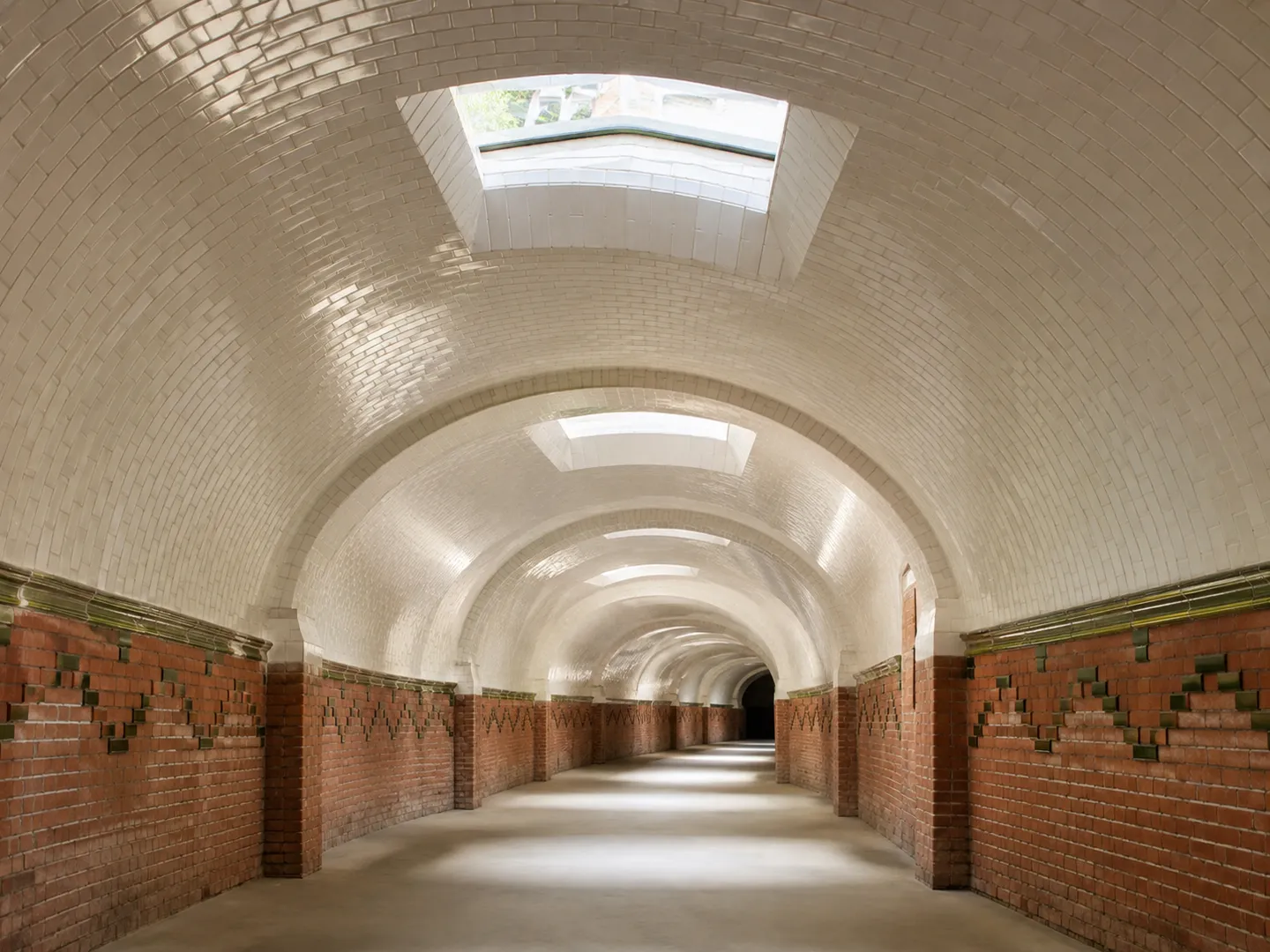
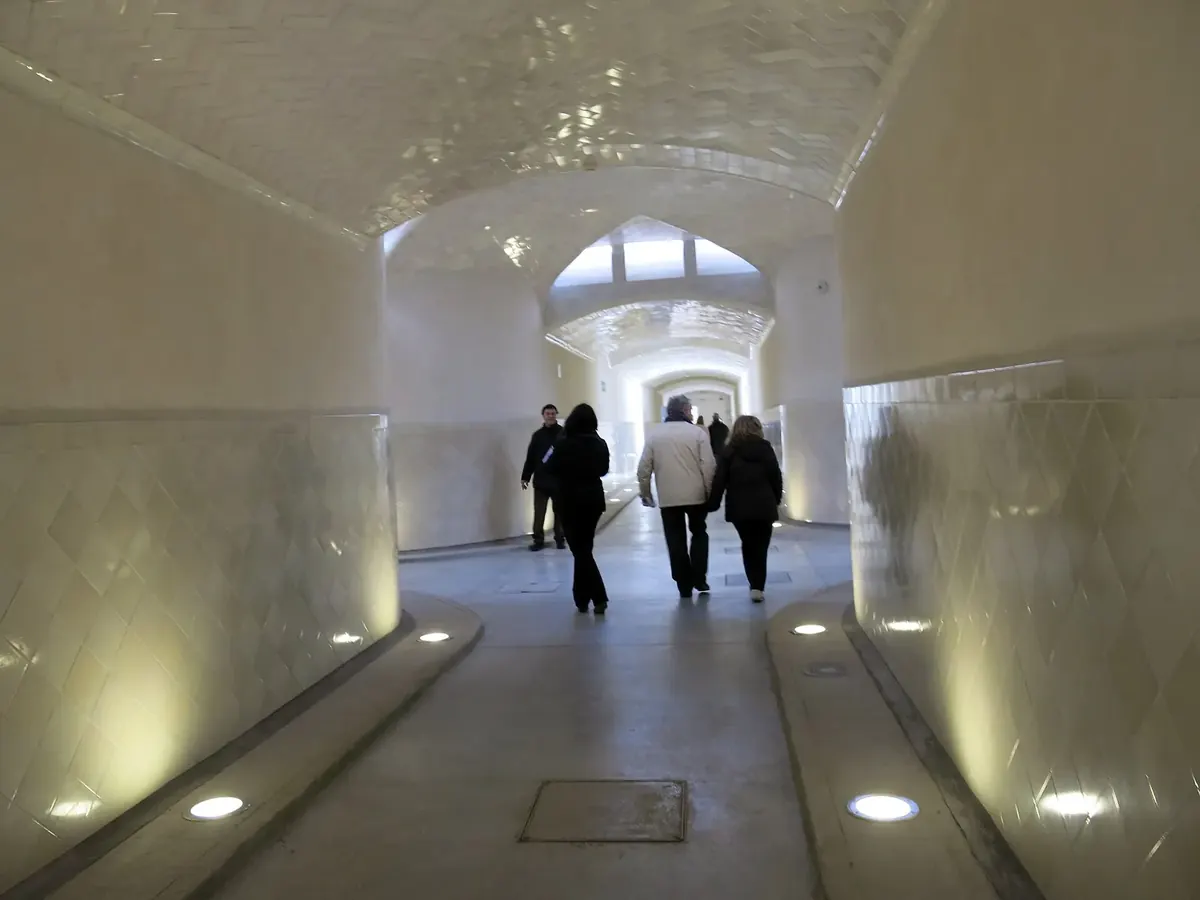
- 1 km of underground tunnels connecting the pavilions
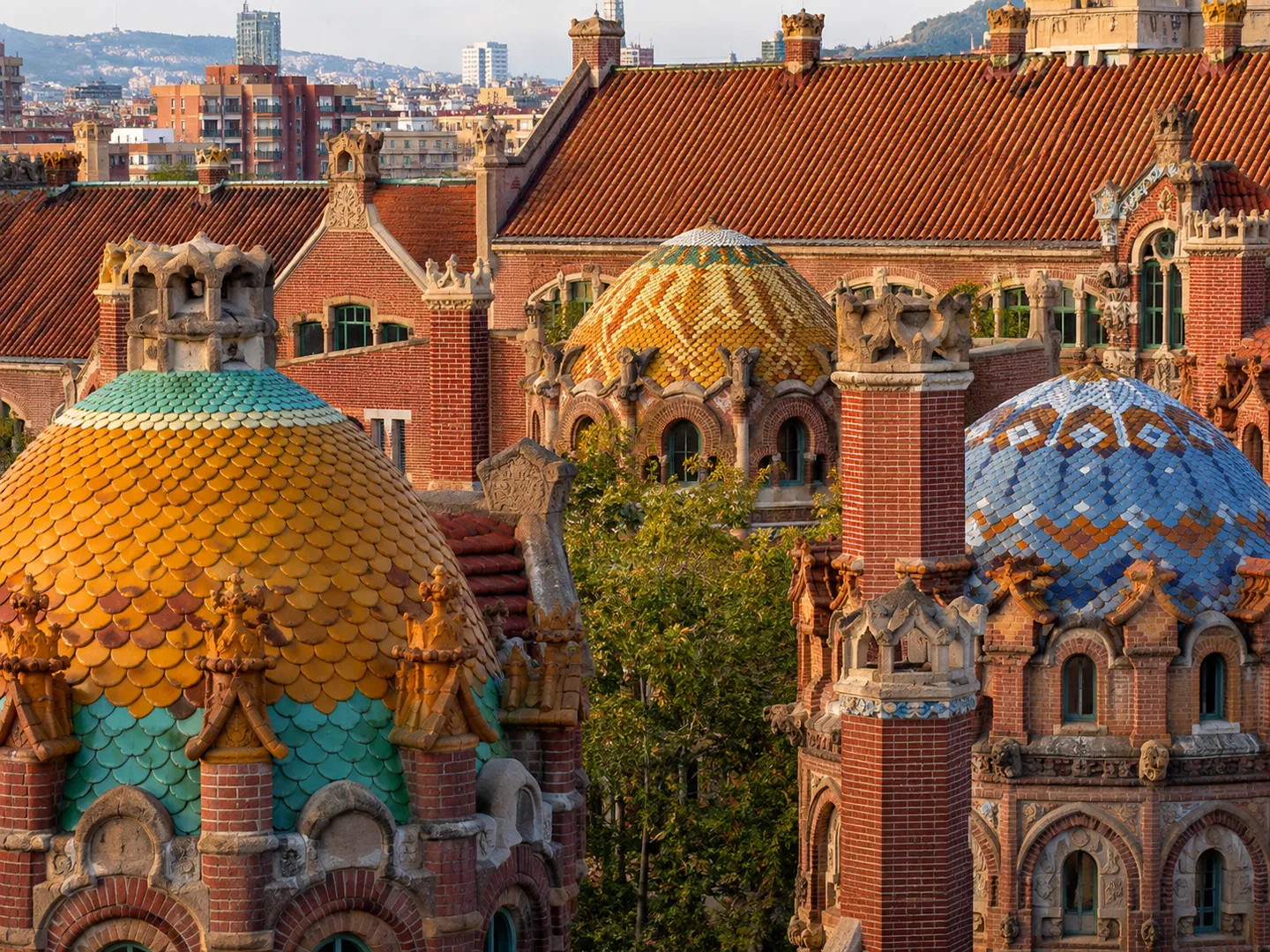
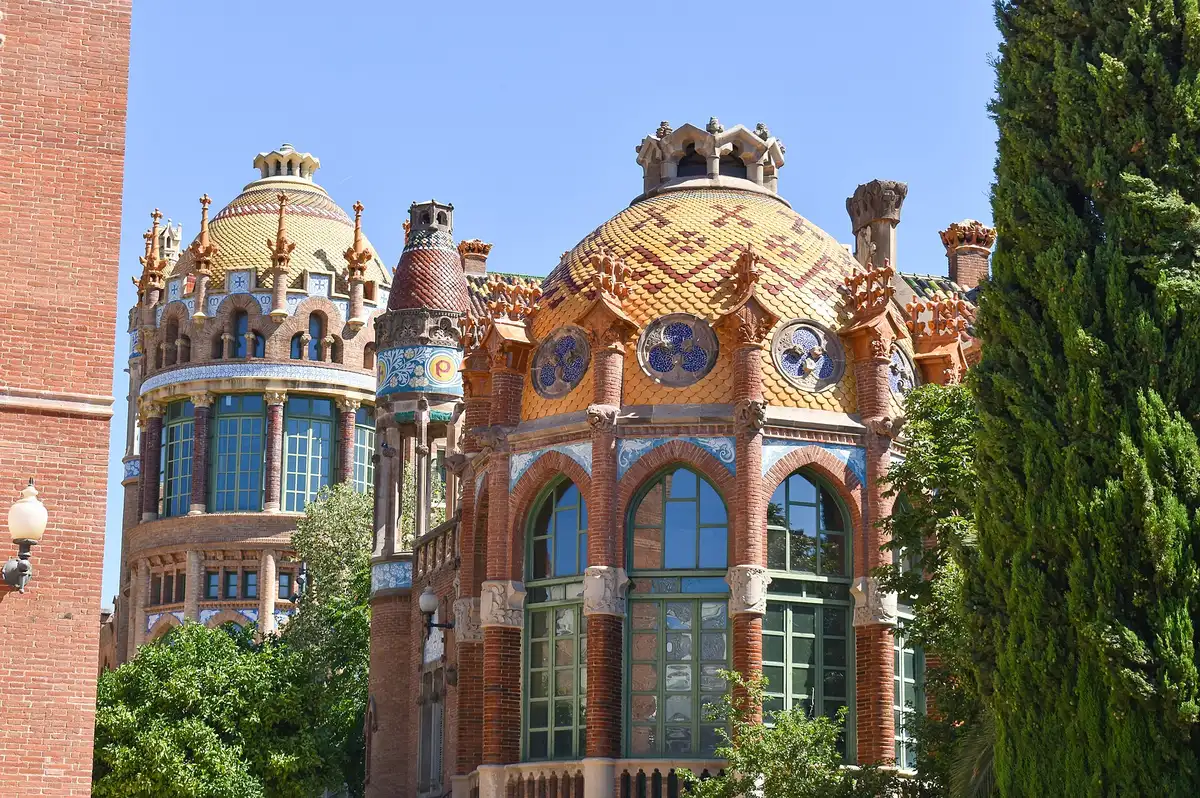
- 12 Modernista pavilions with tiled domes & gardens
What’s included
- Access to the whole 9-block garden-city complex
- Self-guided pace — you control the itinerary
- Smartphone audio-guide option at the venue (extra cost)
- Free cancellation & instant confirmation
What you see, in order
The self-guided route through the Recinte Modernista — the main pavilions, tunnels and gardens, stop by stop.
A typical 1.5–2-hour visit starts at the entrance near Avinguda de Gaudí, then works through the site’s main pavilions and gardens in a loose loop — most visitors follow the signs and their own pace.
- Administration building≈15 min — The mosaic façade and Art Deco staircase are the visual anchor; the building’s interior documents the hospital’s history.
- Underground tunnel network≈10 min — About 1 km of covered galleries link the pavilions — they stay cool, and the lightwell ceilings are Modernista in themselves.
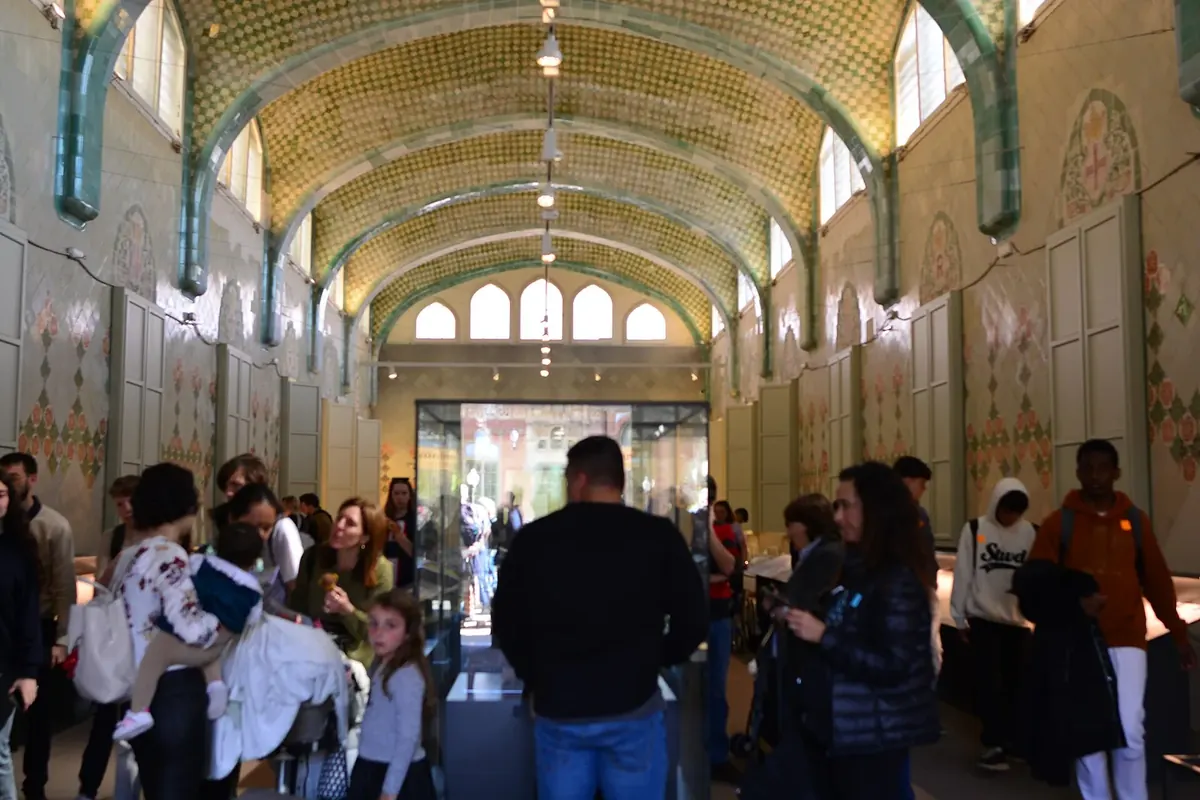
- Sant Rafael pavilion≈10 min — Restored as a 1920s-ward ward museum; you walk through a patient bedroom, pharmacy and ward layout from the hospital era.
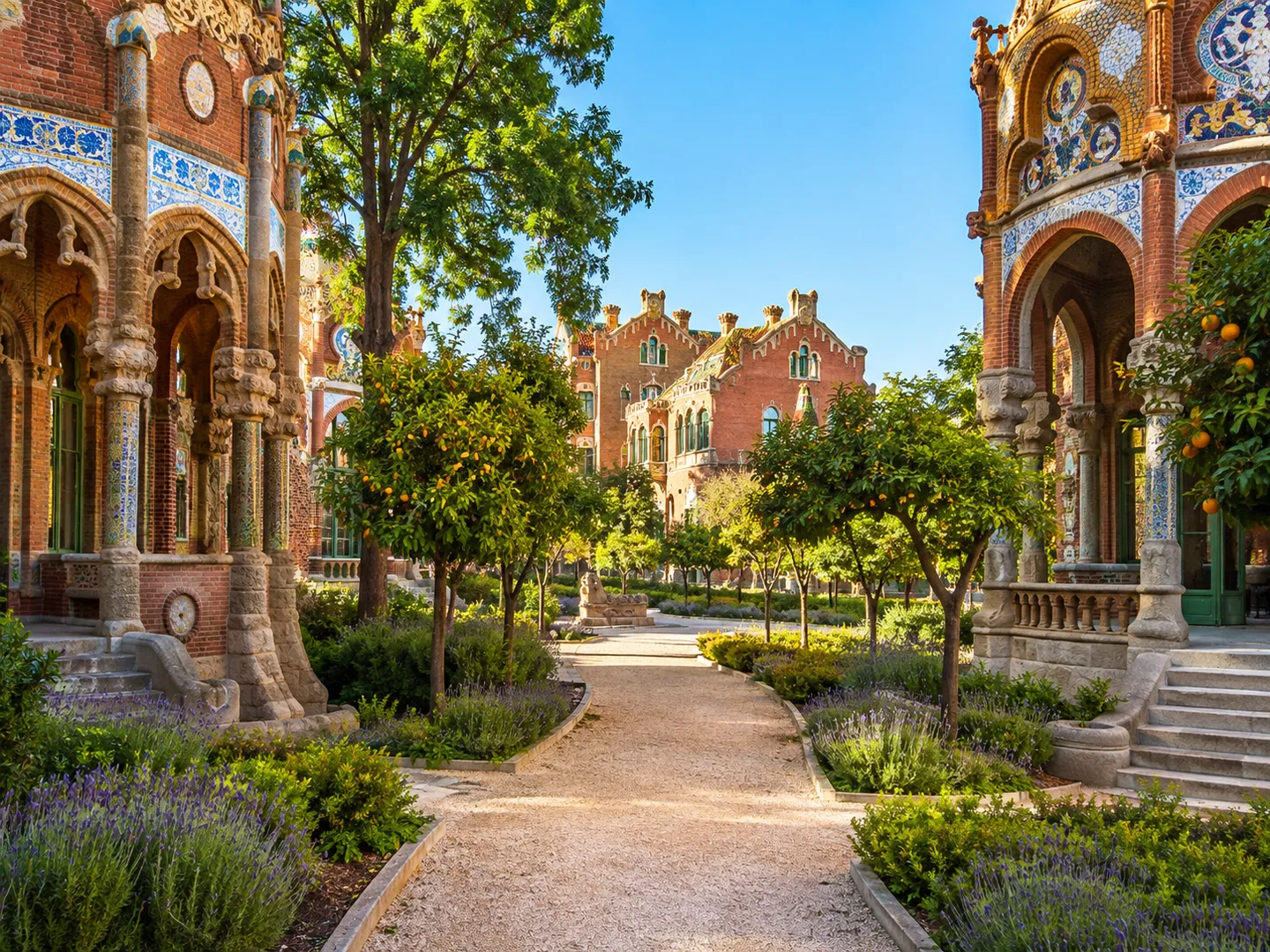
- Pavilion gardens & domes≈20 min — The tiled domes glow in morning light; the gardens between pavilions are where the garden-city design shows — quiet, planted, removed from urban street life.
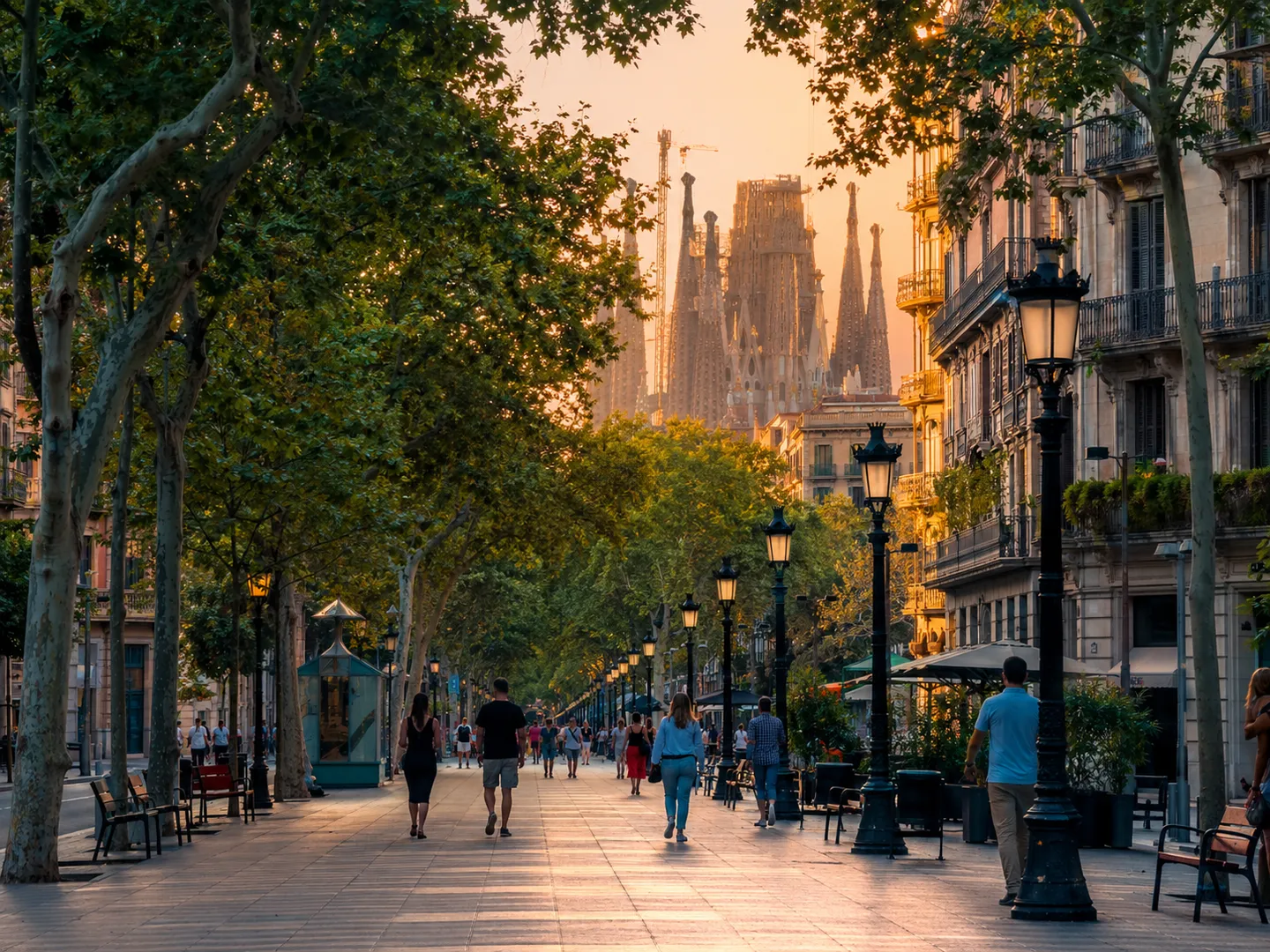
- Exit & Avinguda de Gaudí≈5 min — You finish near the site’s northeast gate, with the Sagrada Família visible ahead down the avenue.+ free time
The whole walk typically takes 1.5–2 hours at a proper pace. From here you can continue straight down Avinguda de Gaudí to the Sagrada Família, a flat 10-minute walk.
How booking works
Pick your way in
Self-guided €18 entry, a guided Modernisme walk, or a private 2-hour tour.
Check real availability
See live dates and prices from GetYourGuide.
Book with free cancellation
Instant confirmation email; most options are refundable up to 24 hours before.
Just turn up
Your confirmation has the meeting point or entry details.
Sant Pau self-guided entry: €18, no lines
The easiest way in: book on GetYourGuide, show your confirmation at the gate, and explore at your own pace.
Three ways to experience Sant Pau
Self-guided, guided walks, or private tour — how to pick the right fit.
| Most popularBarcelona: Sant Pau Recinte Modernista Entry Ticket | Modernist Architecture beyond Gaudi in a Small-Group tour | Skip-the-line Recinte Modernista de Sant Pau Private Tour | |
|---|---|---|---|
| Option | Self-guided entry | Guided Modernisme walk | Private 2-hour tour |
| Price | €18 | €79 | €205 |
| Duration | 1.5–2 hrs | 3 hrs | 2 hrs |
| Group size | You control it | Small group 10–15 | Private group |
| Rating | 4.7★ | — | 5.0★ |
| Free cancellation | ✓ Up to 24 h before | ✓ Up to 24 h before | ✓ Up to 24 h before |
| Book this → | View → | View → |
Photo Gallery
Sant Pau through the lens
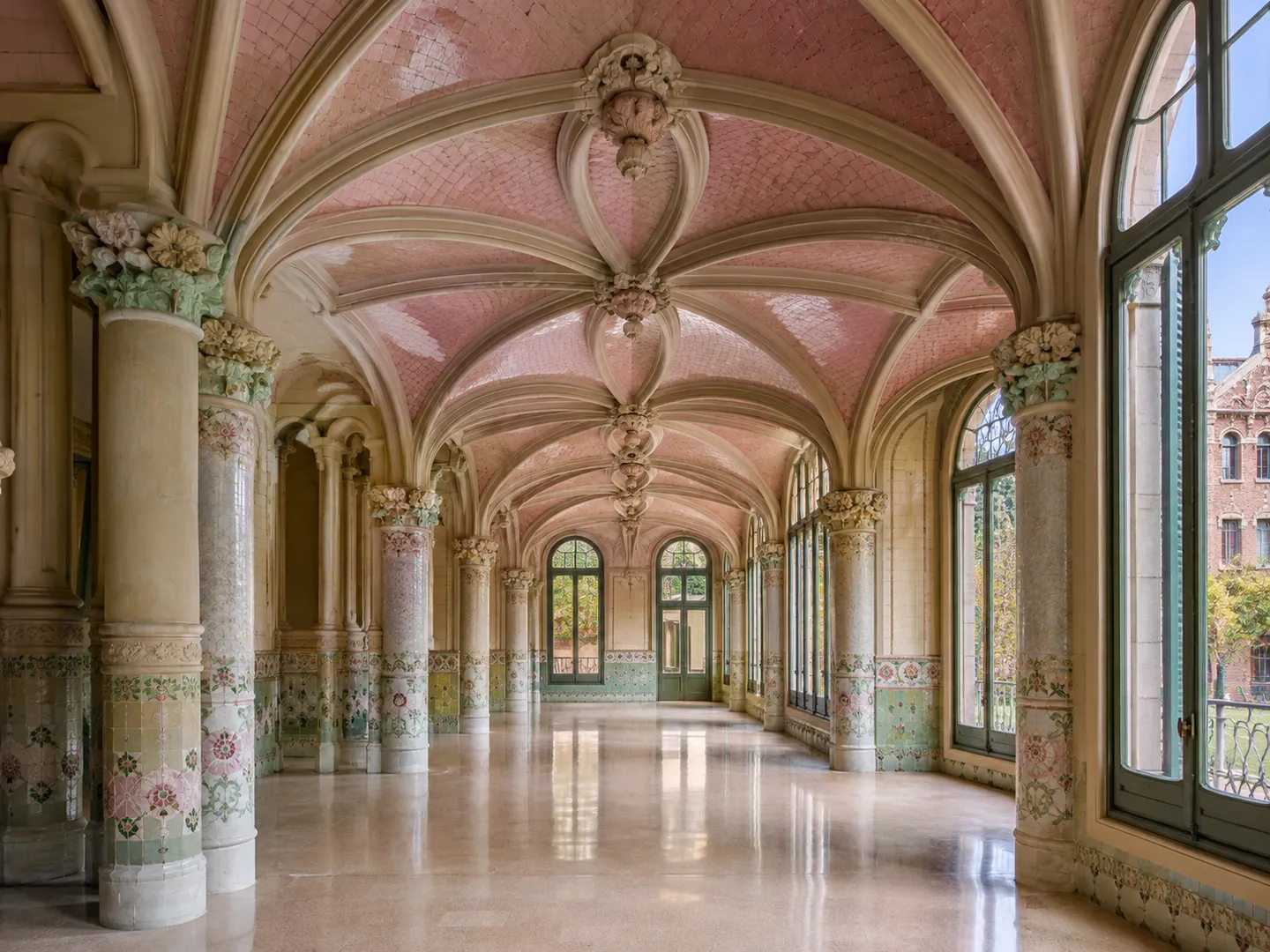
The façades, tunnels, pavilions and gardens that make the Recinte Modernista.
All Sant Pau tickets & tours
Self-guided entry, Modernisme walks, and private tours with skip-the-line access.
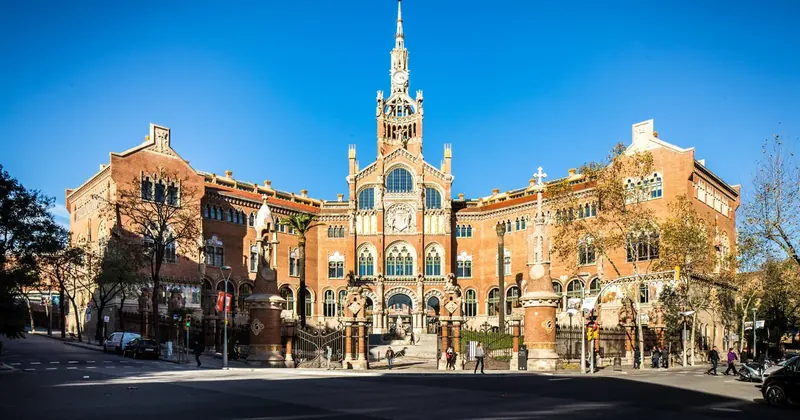 Official entry ticket
Barcelona: Sant Pau Recinte Modernista Entry Ticket
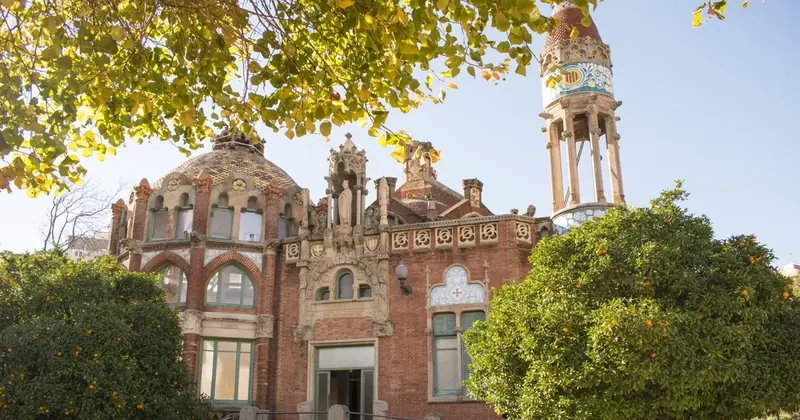 Private · skip-the-line
Skip-the-line Recinte Modernista de Sant Pau Private Tour
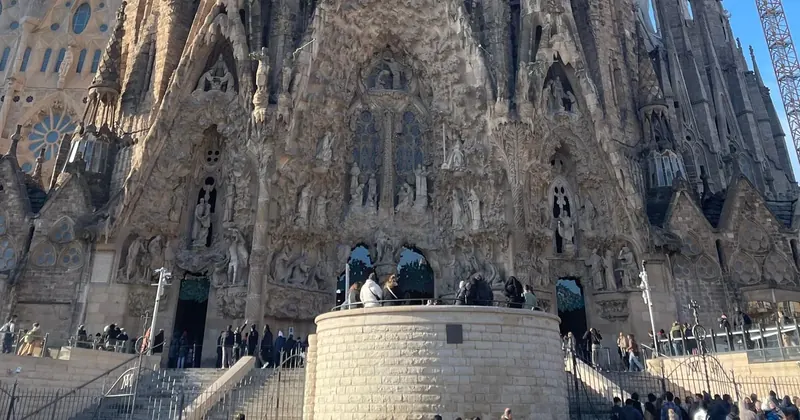 Sagrada Família combo
Sagrada Família Private Tour & Optional Sant Pau
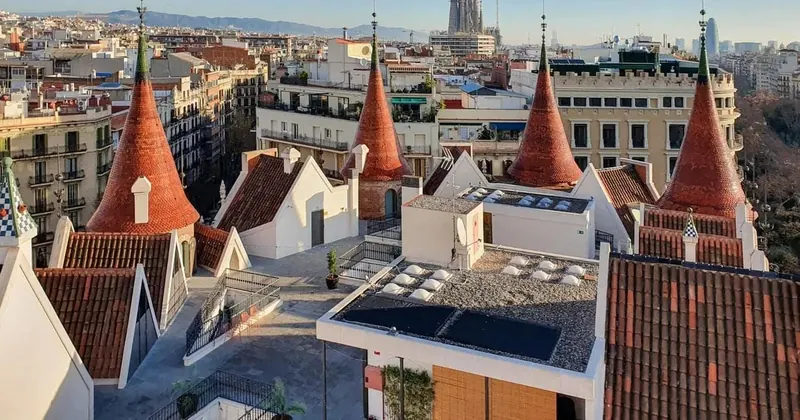 Rooftops & hidden gems
Barcelona Beyond Gaudí: Modernism, Rooftops, and Hidden Gems
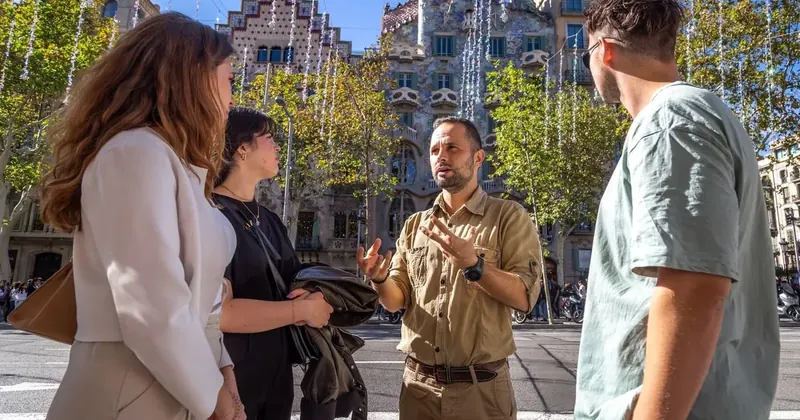 Small group
Modernist Architecture beyond Gaudi in a Small-Group tour
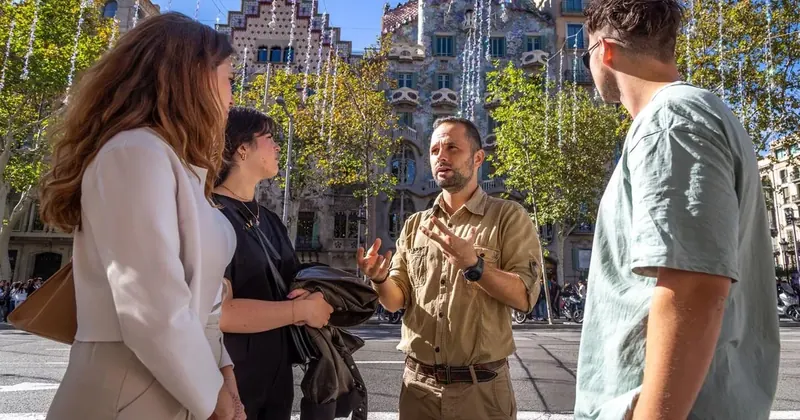 Private walking tour
Gaudí & Catalan Modernism Private Walking Tour
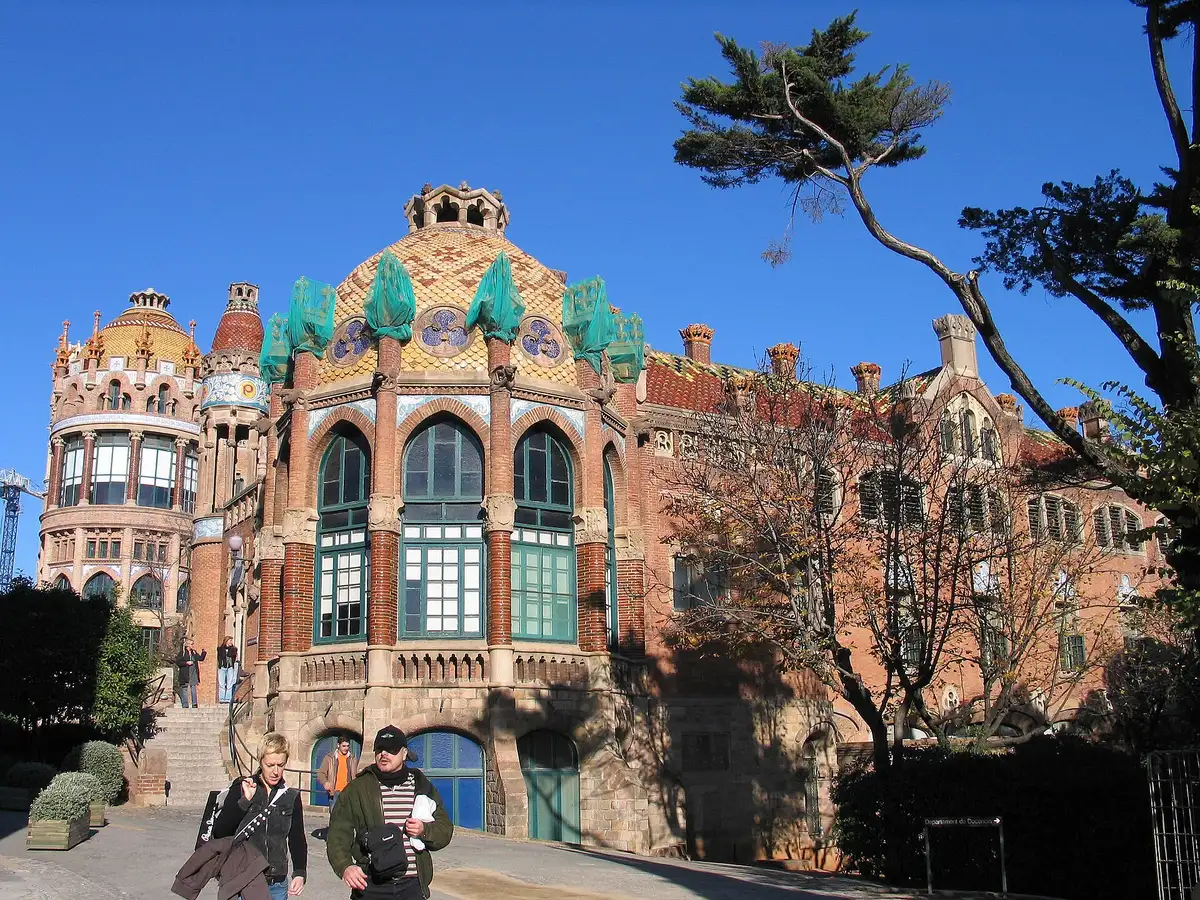
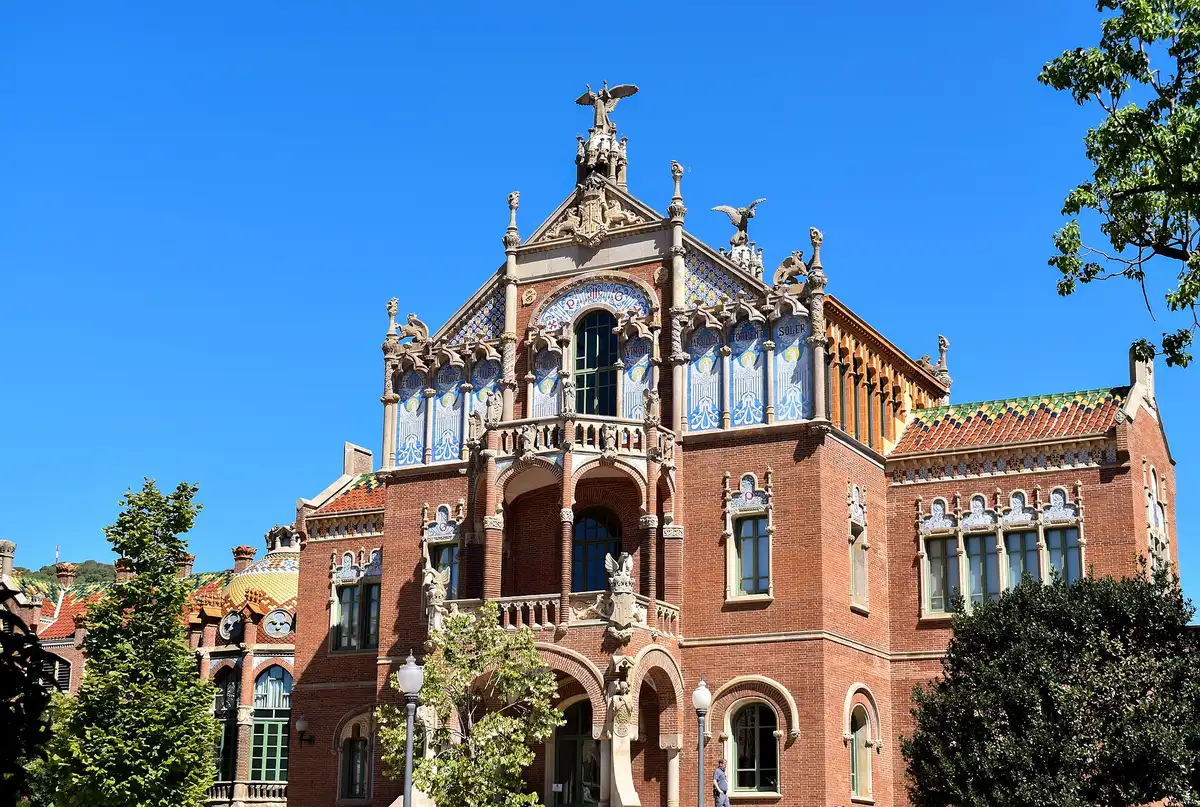
Real photos from Sant Pau — this is what you actually see
Six genuine photographs of the pavilions, tunnels and gardens, taken by visitors and photographers on the site itself. You could take shots like these yourself — click any photo to see it full-size.
What guests say about Sant Pau
Real reviews from travellers who booked the experiences we feature.
The structure of the building is amazing. I feel it’s not as heard of as the other attractions.
The largest Art Nouveau building complex in existence, and other architectural landmarks. Great tour.
The museum section on how the hospital was built and evolved, the courtyard gardens.
Feels like stepping back in time. Can’t be captured in photos.
Amazing place to visit, especially for health workers like me.
The concept of the hospital was carefully thought out and well ahead of its time.
Ratings and reviews are the operators’ live GetYourGuide figures. Read our full tour reviews ›
Quick answers before you book
The essentials so you know what to expect before you visit.
Is Sant Pau still a working hospital?
No — it closed as a hospital in June 2009 when the new Hospital de Sant Pau opened next door. The historic 1902–1930 complex reopened to visitors in 2014. The full story.
Is it worth €18?
Yes, for most visitors. It’s the world’s largest Art Nouveau complex, designed by Gaudí’s teacher, a UNESCO World Heritage site, and a fraction of Sagrada Família crowds. The honest case for going.
How long do you need?
1.5–2 hours for a proper visit of the pavilions, tunnels and gardens. 45 minutes if you’re rushed. What to prioritise if you’re short on time.
Is the first Sunday really free?
Yes, but slots are limited and sell out. You either book ahead or queue early. When free entry is worth the wait, and when €18 is the better call.
Can’t make these dates?
Browse more available hospital de sant pau tickets and find one that fits your schedule — all with instant confirmation and free cancellation.
The Insider’s Guide
The Ultimate Sant Pau Guide: Barcelona’s Art Nouveau Masterpiece
Most people searching for "hospital de sant pau" think it’s still a working hospital. It isn’t. What makes the Sant Pau Recinte Modernista matter — and why it’s worth a half day of your Barcelona time — is that it’s the world’s largest Art Nouveau complex, designed by the architect who taught Gaudí, built as a garden-city hospital from 1902 to 1930, and it sits a 10-minute walk downhill from the Sagrada Família. Here’s what you actually need to know.
The confusion: hospital-that-isn’t
The Modernista hospital closed in June 2009 when the new Hospital de Sant Pau opened on the north side of the complex. The historic 1902–1930 site was then restored and reopened to visitors in 2014. Today, when you book a €18 ticket or a guided tour, you’re visiting a museum and heritage site, not a functioning hospital. The working hospital is separate, next door, and a different institution entirely.
Lluís Domènech i Montaner, not Gaudí
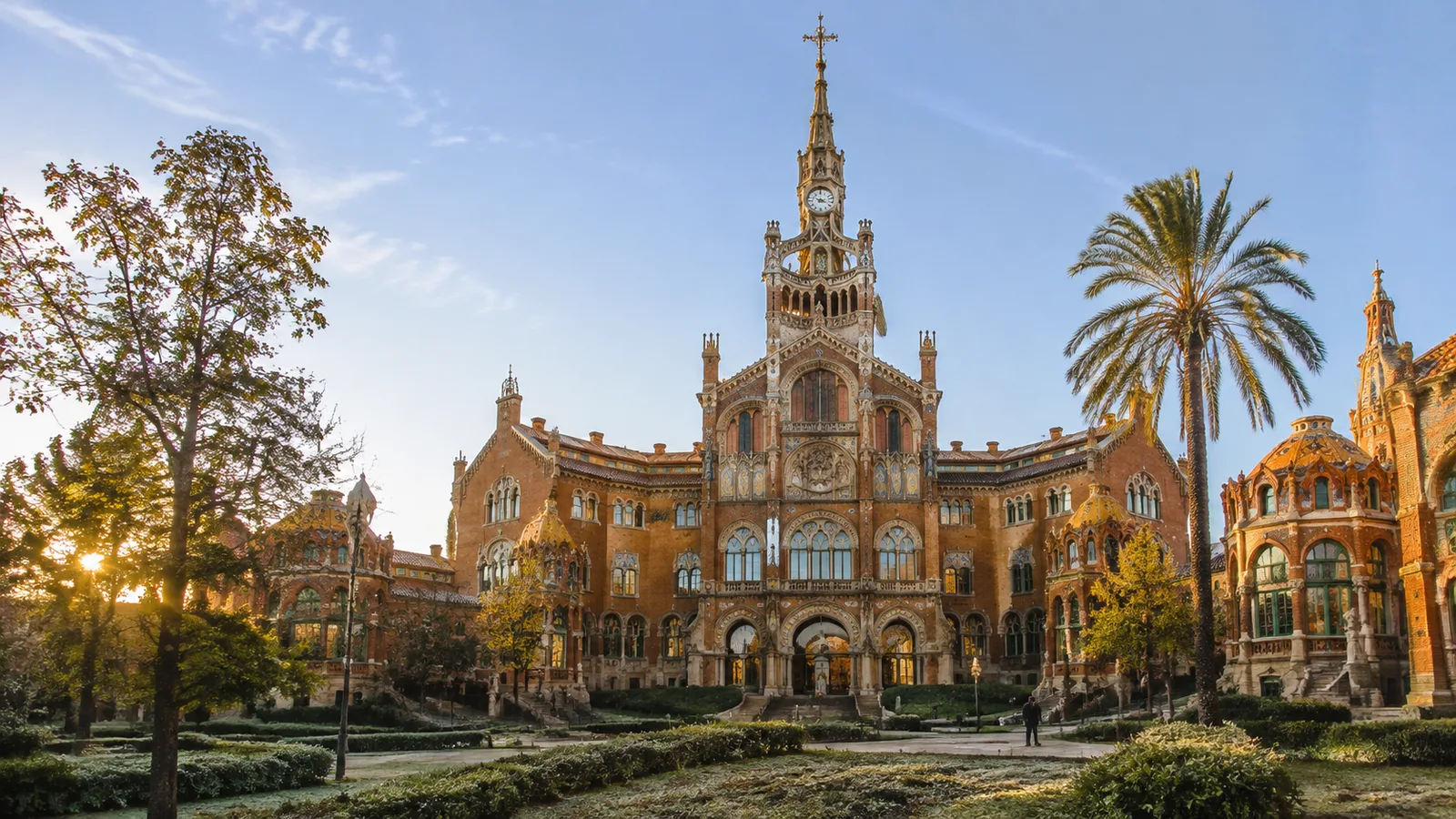
The site was designed by Lluís Domènech i Montaner (1850–1923), the architect who taught Antoni Gaudí at the Barcelona architecture school. Domènech is far less known than his student, but his reach is longer: he designed the Palau de la Música Catalana (also a UNESCO World Heritage site, listed the same year as Sant Pau, 1997) and several other landmarks across Barcelona. Sant Pau is his masterpiece — 12 pavilions, a 9-block garden-city plan set at 45° to the Eixample grid, and about 1 km of underground tunnels so patients moved between wards through light-filled galleries instead of streets. The design logic was practical: in 1902, moving patients outdoors between wards risked infection. Domènech’s solution was elegance itself.
The garden-city hospital concept
What makes Sant Pau unusual is the thinking behind it. Most hospitals are compact, vertical. Domènech planned a horizontal, dispersed complex: separate pavilions for different patient populations (TB ward here, infectious diseases there), connected by covered tunnels, with gardens and light everywhere. Each pavilion had its own purpose; the Administration building held the offices and the grand public staircase. The gardens between pavilions were as much part of the design as the architecture itself. A patient moving from Ward A to the pharmacy didn’t cross the street; they walked through a light-filled tunnel or a planted garden. By 1930, when the final pavilion opened, it was the most advanced hospital design in Europe.
What you actually see when you visit
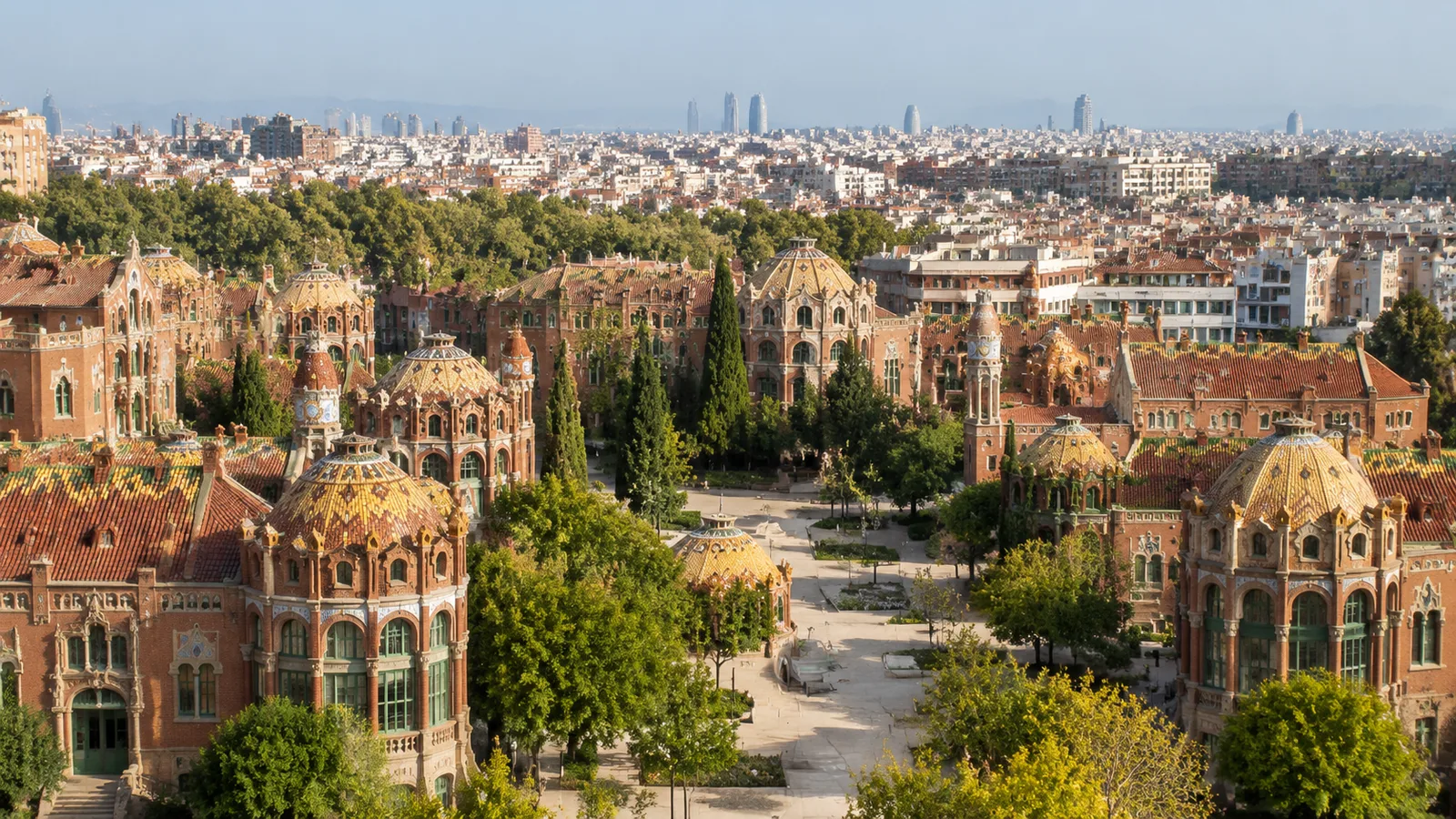
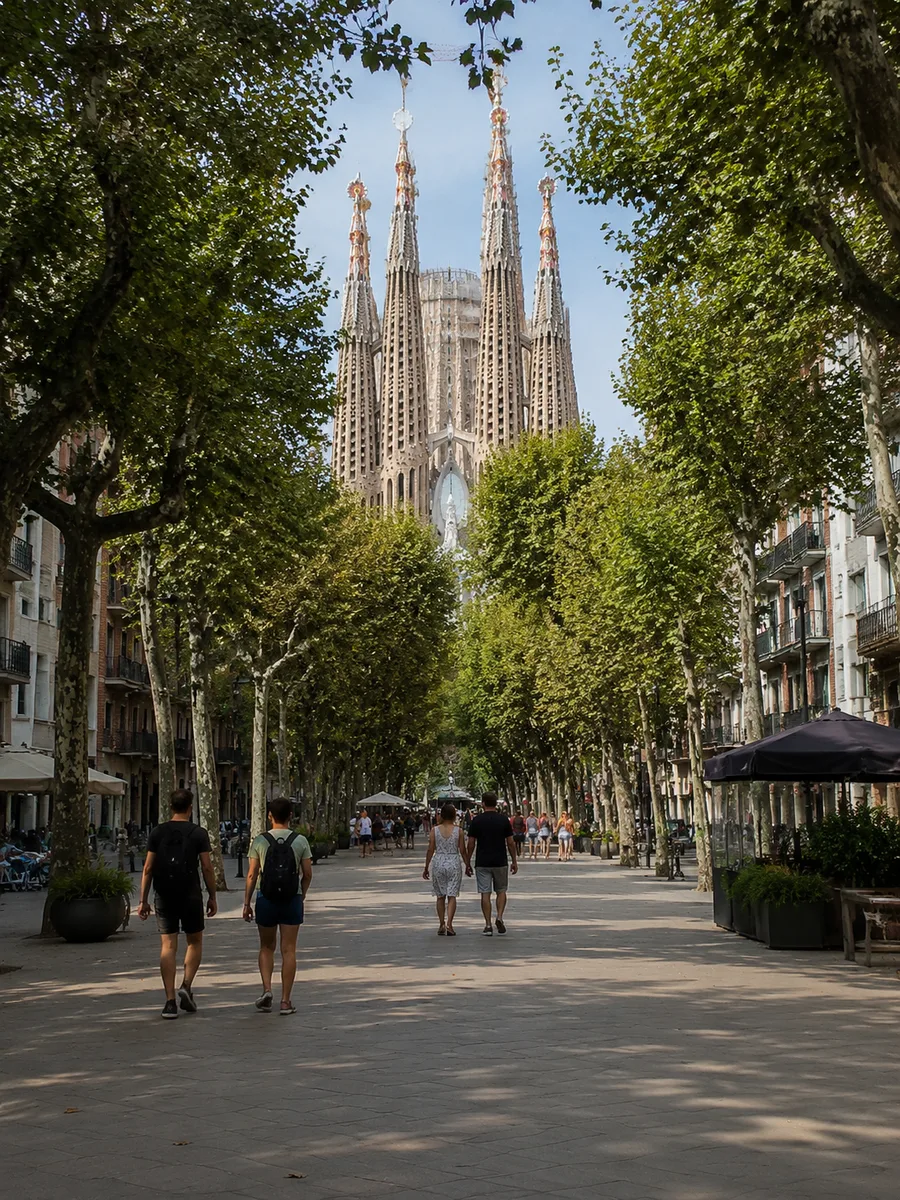
A typical 1.5- to 2-hour self-guided visit covers the main pavilions and the tunnels. You start at the entrance near Avinguda de Gaudí, usually at the Administration building with its stunning mosaic façade and Modernista staircase. From there, you descend into the tunnel network — they stay cool, and the lightwell ceilings are Modernista in themselves. You emerge into pavilion gardens, pass the Sant Rafael pavilion (restored as a 1920s-era ward museum), see the tiled pavilion domes — they glow in morning light — and work your way through the site at your pace. Most people then exit toward the northeast, where Avinguda de Gaudí stretches ahead with the Sagrada Família visible in the distance.
Why you should visit in the morning
Morning light is everything here. The mosaic façades read best when the sun hits them low; the tiled domes glow rather than glare. By early afternoon, the light gets harsh and the crowds (few as they are) accumulate. The site also feels quieter before 11:00 am — a sharp contrast to the Sagrada Família, where you’ll wait in queues. Photography is allowed, and smartphone audio-guide rentals are available at the venue if you want deeper context beyond what the plaques provide.
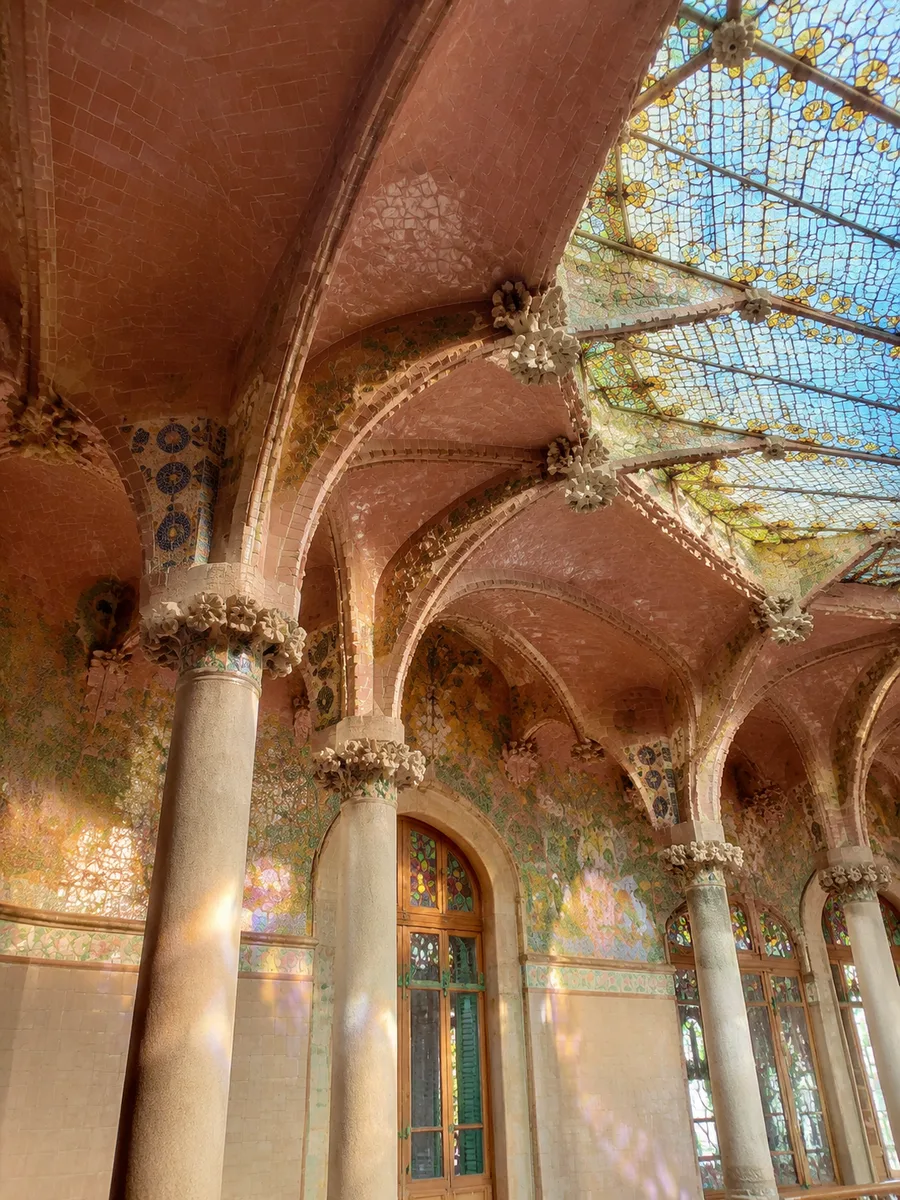
The difference between self-guided and guided visits
You can absolutely visit Sant Pau on your own. The €18 entry gets you the whole site; you control your pace; you can skip pavilions or spend an hour in the gardens. If you have time and a bit more budget, a guided walk adds context: the story of Domènech, how the garden-city design actually worked, the history of the institution (it traces back to a hospital founded in 1401), and how the tunnels still function as an efficient wayfinding system. The most-booked option is a small-group 3-hour Modernisme walk that pairs Sant Pau with other Domènech landmarks and a rooftop viewpoint on Passeig de Gràcia. Private tours (€205) skip lines and can be tailored to your interests.
The walk from the Sagrada Família
The Avinguda de Gaudí is a straight, flat, 1 km walk that connects both monuments. Both are visible from mid-avenue. It takes 10 minutes at a normal pace, and the avenue itself — planted, wide, designed in the early 20th century — is pleasant enough to walk. This is why Sant Pau works so well as a second stop: it’s not a detour; it’s on the way if you’re heading uphill toward Montjuïc or the Park Güell quarter.
First Sunday free, but plan ahead
The first Sunday of every month is free entry, but slots are limited and sell out. Hundreds of Barcelonans visit on free days, and the queue can be frustrating. If you book ahead on GetYourGuide, you get a reserved time slot; if you just walk up, you queue. For most travellers, the €18 booking advantage — confirmed time, no queue, the flexibility to start when you want — is worth the money. But if you’re flexible on dates and willing to queue, the first Sunday works.
The bottom line
Sant Pau is worth visiting. It’s the world’s largest Art Nouveau complex, designed by Gaudí’s teacher, far less crowded than the Sagrada Família, and a genuine deep Barcelona moment that most visitors skip. You can see it in 1.5–2 hours or linger all afternoon; you can visit alone or with a guide; and you can combine it with the Sagrada Família in a half day. Either way, book the €18 ticket on GetYourGuide, arrive in the morning, bring water, and let the pavilions and tunnels do their work.
Frequently asked questions
Is Sant Pau still a hospital?
No. It closed as a hospital in 2009 and reopened to visitors in 2014. The new Hospital de Sant Pau is a separate, functioning hospital next door. The full story of the 1902–2009 hospital era and the 2014 reopening.
Who designed Sant Pau?
Lluís Domènech i Montaner (1850–1923), the architect who taught Antoni Gaudí at the Barcelona architecture school. The site is the world’s largest Art Nouveau complex and a UNESCO World Heritage site since 1997. The architect, the design, and the 120-year history.
How much does it cost to visit?
Self-guided entry is €18; guided Modernisme walks range €79–€95; private 2-hour tours are €205. First Sunday monthly is free but slots are limited. Full breakdown of prices and what each option includes.
How long do you need?
Allow 1.5–2 hours for a proper visit of the pavilions, tunnels and gardens. 45 minutes gets you the highlights; half a day lets you explore deeply. What to see if you’re short on time.
Can you combine Sant Pau with the Sagrada Família?
Yes — it’s a flat 10-minute walk down Avinguda de Gaudí, the avenue connecting both monuments. You can see both in half a day. How to sequence them and which combo tour to book.
Is Sant Pau worth visiting?
Yes, for most visitors. It’s the world’s largest Art Nouveau complex, far quieter than the Sagrada Família, the easiest second stop in Barcelona, and €18 buys you admission to a genuine architectural masterpiece. The honest case for going.
What’s included in self-guided entry?
Access to all 12 pavilions, 1 km of underground tunnels, the gardens, and the Sant Rafael ward museum. Smartphone audio-guide costs extra at the venue. Compare all options and booking details.
Is Gaudí buried at Sant Pau?
No — Gaudí is buried at the Sagrada Família. Sant Pau was designed by Gaudí’s teacher, Domènech i Montaner.
Still have questions? Email us [email protected]